
The High Ground with Chloe & Derek

Why This Bootstrapped Founder Says No to Money | ft. Cameron Stallard

Chloe sits down with Cameron Stallard, co-founder of Brisbane hospitality-tech company Grayza, on why saying no to revenue that doesn't fit the product is a growth lever, not a sacrifice, and the 300-venue client story that proves it.

Episode 86 83 min

Overview

Chloe sits down with Cameron Stallard, co-founder of Brisbane hospitality-tech company Grayza, on why saying no to revenue that doesn't fit the product is a growth lever, not a sacrifice, and the 300-venue client story that proves it.

Key Takeaways

  • Bootstrapped founders who turn down wrong-fit clients grow faster than ones who say yes to everything. Cameron turned down a 14-venue group worth a 20% revenue bump to protect the product's reputation.
  • Refusing middleware and holding out for direct integrations keeps you in control of the customer experience. Cameron earned Grayza's first direct POS integration by bringing an eight-site group to the vendor.
  • The wrong client can cost you more than a lost deal. A 300-venue group demanding custom features cost a competitor two years of bespoke engineering. An HR company that said no replaced the same revenue in a month.
  • Walk away from partners who can't match your pace. The friction compounds faster than the revenue they bring in.

Chapters

The conversation

About Cameron Stallard

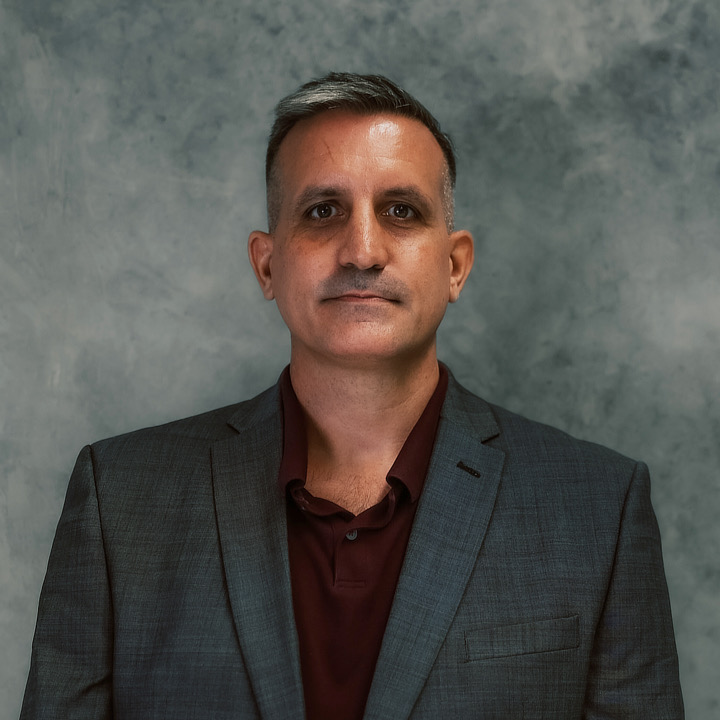
Cameron Stallard is the co-founder of Grayza, a Brisbane hospitality-tech company that builds order-at-table, order-ahead, kiosk ordering and kitchen display screens for venues across Australia. Grayza was bootstrapped with no outside investment. Cameron is also the operational mind behind AM Social, PM Social and AMPED Entertainment.

Connect With Cameron

You Ask, We Answer

Frequently Asked Questions

Bootstrapping a startup means building the business with the founder's own money and early customer revenue, without raising outside investment from venture capital, angels or institutional funds. Bootstrapped founders keep complete control of the company and all decisions. The trade-off is slower growth and heavier personal risk. Many successful software companies, including Mailchimp, Basecamp and Atlassian in its early years, were bootstrapped before they ever took outside capital.

Some founders refuse outside investment because taking capital changes who the business reports to. Venture investors require growth at a pace that often forces pricing, hiring and product decisions the founder would not make otherwise. Bootstrapped founders can turn down unfit clients, hold prices, and build the product on their own timeline. The cost is slower growth in the short term. The benefit is full ownership and the freedom to protect long-term reputation.

Middleware is software that sits between two other systems and translates between them. In SaaS, a company that integrates with 40 different point-of-sale systems through a middleware provider plugs into one connector instead of building 40 direct integrations. Middleware is faster to ship. The trade-off is that the middleware vendor's roadmap, uptime and bugs become yours. When the middleware provider fails, every downstream customer fails at the same time.

Turn down a client by naming the mismatch honestly and recommending an alternative that fits better. Most founders damage relationships by stalling, vague answers or price increases designed to make the client walk away. A direct 'we are not the right fit for your setup, here is who is' protects the relationship and often returns the client later when their circumstances change. Honesty beats avoidance in every measurable outcome.

An ideal customer profile (ICP) is a written definition of the company your product serves best. A B2B ICP usually names company size, industry, revenue range, geography, the systems they already use, and the problem they are trying to solve. The point of an ICP is to make it easier to say no. Any opportunity outside the profile is a flag, not a win. Companies with a written ICP convert faster and churn less than companies without one.

No single client should represent more than 20 percent of a business's total revenue, and ideally no more than 10 percent. Concentration above 20 percent means the business is effectively working for that client, not with them. The client knows this and uses it as leverage on price, custom features and contract terms. Diversifying revenue below the 20 percent threshold protects pricing power, product direction and negotiating position.

Vibe coding is the practice of writing software by describing what you want to an AI assistant and shipping whatever it produces, without a developer reviewing the code or tests. It is useful for prototypes and personal tools. It is risky for business software because AI-generated code often works for the happy path and fails silently on edge cases, security and scale. A real business should treat AI as an assistant to a developer, not a replacement for one.

Software companies grow without venture capital by keeping operating costs below revenue from the first month, charging for the product early rather than growing a free user base, and reinvesting profit into the product and the next hire. Bootstrapped companies typically target 20 to 40 percent year-on-year growth rather than the 100 to 300 percent venture companies chase. The slower pace compounds safely because every dollar spent comes from a customer, not a round.

A point-of-sale (POS) integration is a direct connection between a SaaS product and a hospitality or retail venue's POS system. SaaS companies build direct POS integrations to control the customer experience end to end: menu updates, order flow, payment reconciliation and reporting all stay in sync without manual work. Direct integrations take longer to build than middleware shortcuts, and they give the SaaS company full control over reliability and roadmap.

Boderia designs and operates sovereign revenue systems for scaling B2B companies. The system unifies growth, operations, automation, and AI into a single governed platform. Rather than running fragmented tools and disconnected teams, clients get one platform where every input is visible, every handoff is tracked, and every part of the business feeds into the same source of truth. The free Revenue Maturity Assessment at boderia.io/revenue-system-maturity-assessment shows founders which of the seven pillars is leaking value right now.

Related Articles

Continue reading with more articles on this topic.

Cookie Notice

This website uses cookies to ensure you get the best experience on our website.
Privacy Policy