


Why Adonis Media Became Boderia - and Why Our Name Had to Change Chloe and Derek Buntin tell the full story of the rebrand from Adonis Media to Boderia - and the sovereign business infrastructure underneath it.
Every scaling business has the same broken shape underneath it.
A website that doesn't talk to the CRM. A CRM that doesn't talk to the sales pipeline. Reporting that lives three tools away from the data it's meant to describe.
Most operators know the fragmentation is there. Most tolerate it because they don't see an alternative - the industry has spent fifteen years selling them the fragmented tools that caused the problem. What almost none of them realise is how much revenue is quietly leaking through the cracks between those tools.
Missed follow-ups. Broken attribution. Decisions made on incomplete data. Leads that arrive and vanish before anyone notices.
Boderia is the fix - a proprietary governed revenue system Derek Buntin has spent the last eight years building, unifying website, CRM, sales pipeline, and reporting into a single infrastructure layer. The platform grows with the business rather than forcing the business to bend around a rigid tool.
Boderia is not another agency. It's the sovereign business infrastructure most scaling B2B companies have been quietly missing.
In this episode, Chloe and Derek Buntin (the founders) break down the full story of the rebrand from Adonis Media to Boderia, why the old name stopped describing what the business had become, what Boderia actually delivers to clients today, and what every scaling operator needs to understand about the true cost of the fragmented stack they're still running.
Frequently Asked Questions
Because the word media had come to describe social posts and content creation, when the business had evolved into something structurally different - a sovereign revenue system unifying growth, operations, automation, and AI into a single governed layer. The new name describes what the business now actually delivers to scaling B2B clients.
Boderia is a variation of Bodotria — the Roman name for the Firth of Forth, the estuary connecting West Lothian and Fife in Scotland, where founders Derek and Chloe Buntin both grew up. The meaning underneath it - rising from the mire, the high ground above the chaos - describes what the business delivers to clients.
A sovereign revenue system is a single governed layer that unifies growth, operations, automation, and AI inside one system the business owns rather than rents from disconnected providers. It replaces the fragmented stack most scaling operators still work from and gives them visibility, control, and compounding across the full revenue engine.
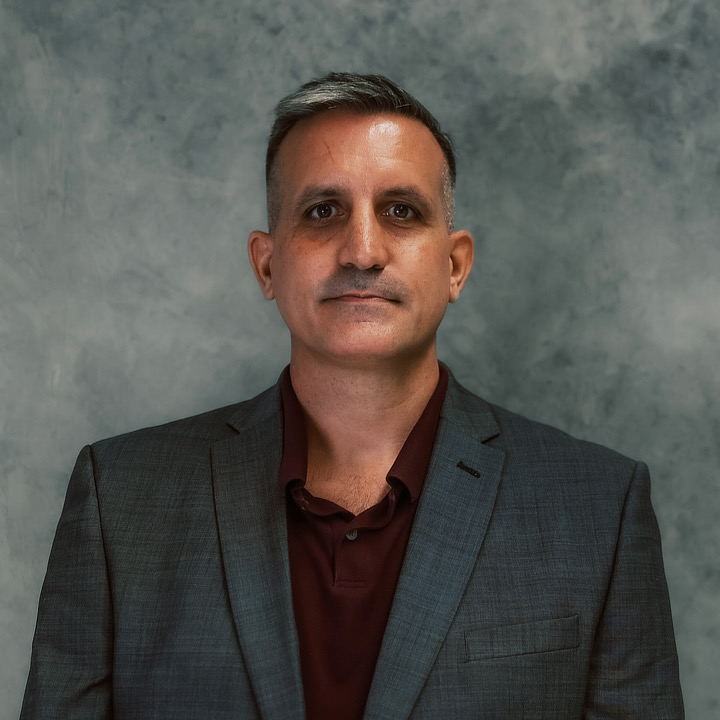
Chloe Buntin is the CEO and Co-Founder leading strategy, positioning, and client delivery. Derek Buntin is the Chief Technical Officer and Co-Founder and has spent the last eight years building Boderia's proprietary system. Both are originally from Scotland - Chloe born in Fife, Derek born in West Lothian - the two regions connected by the Firth of Forth that gave the brand its name.
When the name no longer describes what the business actually does. Signs include prospects consistently misunderstanding your offer, the team struggling to explain what you deliver, or the work having evolved beyond the original positioning. The rebrand from Adonis Media to Boderia happened because the old name had stopped describing what the business had become.
A properly executed rebrand of an established business takes six to twelve months. That includes naming, trademark research, domain acquisition, brand identity development, website rebuild, client communication, and rollout. The Adonis Media to Boderia rebrand took twelve months from start to finish - including a domain disaster that almost destroyed the whole plan three days from launch.
Falling in love with a name before checking if the domain and trademark are available. Assuming a domain purchase went through without verifying (which almost destroyed the Adonis Media rebrand). Choosing a common word with hundreds of variations, then finding it impossible to trademark. And treating the rebrand as cosmetic rather than a repositioning of what the business actually delivers.
You have options. Buy a variant like .io, .co, or a country-specific TLD (Boderia uses boderia.io while boderia.com is held by a domain squatter). Contact the squatter directly. Wait for the domain to expire if it isn't being used. Or pivot to a different name entirely. The important thing is not launching under a domain arrangement that will damage SEO for years.
Communicate early and clearly with existing clients before any public rollout. Explain the reasoning, not just the change. Keep the transition period as short as possible - the longer it drags, the more confusion compounds. And carry the equity forward visibly, referencing the old brand in early communications so clients can bridge the gap in their own memory.
Boderia designs and operates sovereign revenue systems for scaling B2B companies - unifying growth, operations, automation, and AI into a single governed system. Instead of stitching together disconnected tools, clients get one system that moulds to their business and gives them ownership, control, and compounding across the entire revenue engine.
Cookie Notice