A business rarely changes its name without a reason. Sometimes, it recognises a journey that has already taken place. That was exactly the case when Adonis Media became Boderia.
Over the years, the work gradually expanded beyond websites, marketing, and standalone services. The name "Media" no longer reflected the work being delivered or the direction the business was taking.
This is the story behind that transition, from the early days of Adonis Media to the thinking that shaped Boderia, and why the focus now centres on helping organisations build connected Revenue Systems instead of delivering isolated services.
Key Takeaways
- Adonis Media became Boderia to reflect two decades of business evolution beyond marketing services.
- The rebrand recognises how client challenges shifted from marketing execution to commercial visibility and alignment.
- Boderia represents a stronger focus on connected Revenue Systems supporting sustainable, long-term business growth.
- While the name changed, the mission remains helping organisations build stronger foundations for predictable revenue growth.
The Story Behind Adonis Media
For more than two decades, Adonis Media helped businesses navigate one of the most transformative periods in modern commerce.
When Derek Buntin founded the company in 2004, the challenges facing most organisations were relatively straightforward. Businesses were beginning to establish an online presence, websites were becoming a commercial necessity, and digital marketing was still emerging as a discipline.
Back then, success was measured by visibility. The objective was to be found, generate enquiries, and establish credibility in an increasingly connected world.
Over the years, however, the nature of business growth changed dramatically.
Websites evolved into sophisticated digital platforms. Marketing became increasingly data-driven. Software became embedded within almost every aspect of business operations. Organisations gained access to unprecedented amounts of information, automation, and technology.
In theory, businesses should have become easier to manage. But in practice, many became significantly more complex.
As technology matured, so too did the challenges facing leadership teams. Customer information became distributed across multiple systems, reporting became more sophisticated but often less trusted, and even departments became increasingly specialised while visibility across the organisation became harder to maintain.
Businesses invested heavily in software, automation, and digital transformation, yet many leaders found themselves struggling to answer what appeared to be relatively simple questions.
- Where is revenue actually coming from?
- Which activities contribute most significantly to growth?
- How confident can we be in the information we are using to make decisions?
- Why do different systems tell different stories?
Twenty years later, these questions had moved to the forefront of business conversations.
The transition from Adonis Media to Boderia was shaped by those changes.
It was not the result of a rebranding workshop or a desire to reinvent a successful business. It was the culmination of two decades spent helping organisations grow and observing how the challenges limiting growth had evolved.
What began as a business focused on websites and marketing gradually became a business focused on visibility, alignment and the systems that support revenue.
This is the story of that evolution. More importantly, it is the story of a problem that increasingly affects organisations regardless of their industry, size, or stage of growth.
Growing Alongside the Internet
Long before Adonis Media existed, there was a curiosity about business itself.
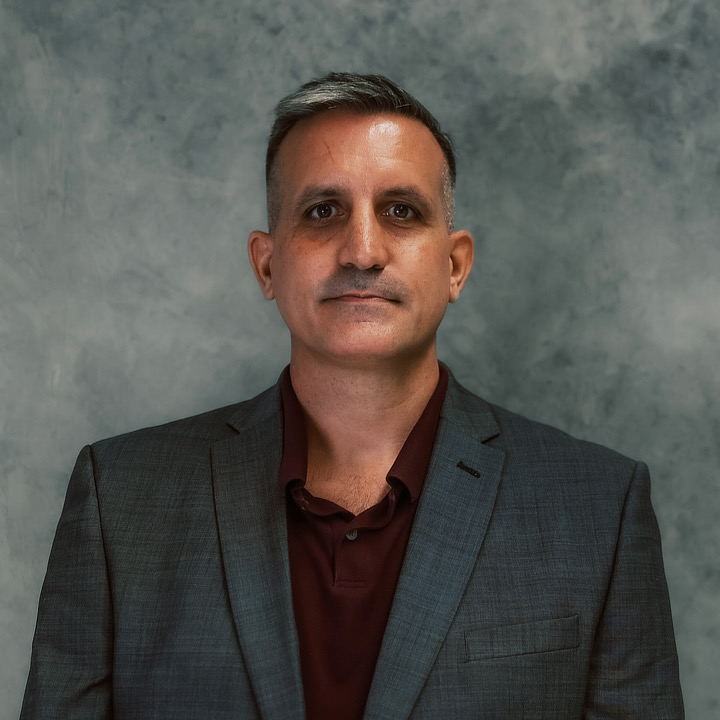
After leaving the British Army and studying Leisure Management, Derek Buntin started a car detailing business in Edinburgh with a friend. Like many entrepreneurial ventures, it provided an early education in what growth actually looks like inside a company.
At the same time, another opportunity was beginning to emerge.
The internet was becoming increasingly accessible, and businesses were starting to explore what an online presence could mean for their future. Websites remained relatively uncommon compared to today, particularly among smaller organisations, and many business owners were still trying to understand how digital technology might influence growth.
Rather than outsourcing the work, Derek began teaching himself web development.
Days were spent running the detailing business while evenings were spent learning PHP, building websites, and experimenting with the technology that was beginning to reshape the commercial landscape.
As Derek worked with more businesses, a consistent pattern began to emerge.
Building websites was only one part of a much larger picture. The greater challenge lay in everything surrounding the website, from how people found a business to what happened after they arrived. Understanding why some enquiries became customers while others did not, and identifying which activities genuinely contributed to growth, gradually became more important than the website itself.
Those observations led to the creation of Adonis Media in 2004. Over the following years, the company evolved alongside the internet itself. What began as website development expanded into search engine optimisation, digital marketing, software development, automation, and broader business growth initiatives.
As organisations became increasingly reliant on digital channels, their priorities expanded. Greater visibility, consistent lead generation, improved automation, meaningful reporting, and reliable data gradually became essential requirements for businesses looking to grow with confidence.
By the early 2010s, it was becoming increasingly evident that the internet had developed into far more than a communication channel. It had become part of the operational infrastructure supporting how businesses delivered services.
And that shift would eventually reveal a much larger challenge.
The Problem We Kept Seeing
As Adonis Media expanded its capabilities, a pattern began emerging across client engagements.
The businesses varied considerably. Some were operating within technology, healthcare, manufacturing, or specialist B2B industries. Their products differed, their customers differed, and their internal structures differed.
Despite those differences, they were experiencing remarkably similar challenges.
Businesses would approach us looking for help with lead generation, only to discover that their real issue involved sales process visibility. Others wanted a new website when the larger challenge was disconnected systems or inconsistent customer information.
Again and again, the symptoms appeared in one area of the business while the causes existed elsewhere.
What made this particularly interesting was that these organisations were not lacking effort or technology. Many had invested in CRM systems, marketing automation, reporting tools, project management software, and customer success platforms. Every investment addressed a genuine business need.
The challenge was what happened over time.
Rather than designing a connected operating environment, organisations solved problems as they appeared. New systems were introduced to improve sales visibility, automate communication or provide deeper reporting.
Viewed individually, these decisions were entirely rational. But collectively, they created something unexpected.
Complexity.
Customer information became scattered across multiple platforms, reports produced different answers, and teams developed separate processes with limited visibility across the wider business.
The irony was difficult to ignore. Businesses were investing in technology to create visibility, yet many leadership teams felt less certain about what was actually happening inside their organisations.
As we examined more businesses, we recognised the same pattern within our own organisation. Like many growing companies, we added software to solve emerging challenges. Every platform delivered value, but information became fragmented, reporting required reconciliation, and understanding the business depended on connecting systems introduced years apart.
That experience changed how we thought about growth.
The issue was not a lack of activity. It was a lack of alignment.
Looking at Growth Differently
For many years, growth was viewed through the lens of individual functions.
Marketing created awareness, sales converted opportunities, operations delivered outcomes, and customer success focused on retention and expansion. Each function developed its own processes, systems and measures of success.
The deeper we became involved in client environments, however, it became increasingly difficult to view those functions in isolation. Customers experience a single organisation, not separate departments, and revenue reflects how every part of the business works together.
Our attention gradually shifted from individual activities to the environment supporting them. We found ourselves asking questions such as:
- How does information move through the organisation?
- How do systems interact?
- How are decisions made?
- How do teams share visibility?
- Where does accountability sit?
- How does a customer journey continue beyond the initial sale?
The answers changed everything
The organisations that performed consistently well shared similar characteristics. Their systems supported one another, teams worked with shared visibility, and reporting provided a consistent understanding of performance. Leaders could see how revenue moved through the organisation and make decisions with greater confidence.
And this changed how we thought about growth. It was no longer simply about improving marketing, sales or operations independently.
It was about revenue.
Not revenue as a financial outcome, but revenue as a system influenced by people, processes, technology, data, and decisions.
And once viewed through that lens, it became increasingly difficult to think about growth any other way.
Introducing Boderia, "The High Ground"
By this stage, the work had already changed.
Clients still required marketing, technology, and automation, but those disciplines increasingly formed part of a broader conversation. More time was being spent helping organisations improve visibility, align systems, govern data, and create stronger operational foundations for growth.
The challenge was that the Adonis Media name no longer accurately reflected the work being undertaken. It represented where the business had started, but it did not represent where the business had arrived.
And Boderia emerged.
Numerous names were evaluated, yet none fully captured the direction the business had taken or the vision for its future. When Boderia was proposed, it immediately felt appropriate, as it reflected an identity that had been there all along, waiting to be recognised.
The decision to become Boderia was not about leaving the past behind, but about adopting an identity that represented the direction of the work and the future of the company.
The name itself has Scottish origins and reflects a connection to the place where much of the entrepreneurial journey began. More importantly, it reflects an idea that had become increasingly important throughout years of client work.
Perspective. Visibility. Ownership.
Not simply generating more activity, but creating greater clarity.
By understanding how revenue moves through the organisation, leaders can identify where improvements will have the greatest effect and create a stronger foundation for sustainable growth.
Boderia reflects that evolution. It represents a business focused on helping organisations design stronger commercial environments, built around clarity, alignment, and a shared understanding of how revenue moves across the organisation.
What This Means for Our Clients
For clients already working with us, the rebrand does not change the foundations of the relationship we have built together.
The websites, systems, software, campaigns, integrations, and solutions already supporting your business will continue doing what they were designed to do. The teams you work with remain the same. The commitment behind the work remains the same.
Over the years, working closely with clients has helped shape many of the ideas that eventually became Boderia. Every project, challenge, integration, and conversation contributed to a deeper understanding of how businesses operate once growth starts becoming more complex.
In many ways, Boderia exists because of those partnerships.
Not every organisation requires the same solution, and there is no expectation that every client follows the same path. However, if parts of this story reflect challenges currently being experienced within your business, we would welcome the opportunity to explore them together.
For organisations discovering Boderia for the first time, it is important to understand that this is not the beginning of a new business.
Boderia represents the next stage of a journey that started more than two decades ago through Adonis Media. Historically, businesses often engaged service providers to solve individual problems, and revenue does not move through a business in isolated stages.
That understanding became one of the driving forces behind Boderia.
Rather than treating individual services as separate offerings, the direction shifted towards connecting those capabilities inside a governed Revenue System designed around the organisation itself. The objective is to help businesses create greater alignment between revenue activity, customer data, reporting, automation, AI, operational workflows, and decision-making.
This is not a departure from the work that came before.
It is the result of years spent understanding how growth actually happens inside modern organisations and bringing those lessons together into a more connected approach.
The Next Chapter
The transition from Adonis Media to Boderia is not a new business. It is the continuation of a journey that began more than twenty years ago.
The challenges businesses face today are fundamentally different from those they faced when Adonis Media was founded. The need for visibility, alignment and informed decision-making has never been greater.
The organisations that thrive in the years ahead will not necessarily be those with the most software, the largest teams, or the biggest marketing budgets. They will be the organisations capable of creating clarity from complexity and alignment across increasingly sophisticated environments.
That is the challenge we have spent years observing. It is the challenge that shaped the evolution of the business.
And it is the reason Adonis Media became Boderia.
The name may have changed, but the mission remains remarkably consistent: helping organisations grow by understanding the systems that drive growth in the first place.
From Fragmented Growth to Revenue Systems
The journey from Adonis Media to Boderia was shaped by more than a rebrand.
For organisations experiencing many of the challenges explored throughout our story, the next step is rarely another standalone tool, platform, or service.
If your business is navigating operational complexity, fragmented reporting, disconnected systems, or uncertainty around revenue visibility, we invite you to a free short consultation with our team.
We can explore your current environment, identify opportunities for improvement, and discuss what a governed Revenue System could look like for your organisation.